Home About Course Sales Insights Contact View Course

15 years closing deals that most people walked away from.

Not because I had a better script. Because I understood what was happening on the buyer's side — and I learned to work with that, not against it.

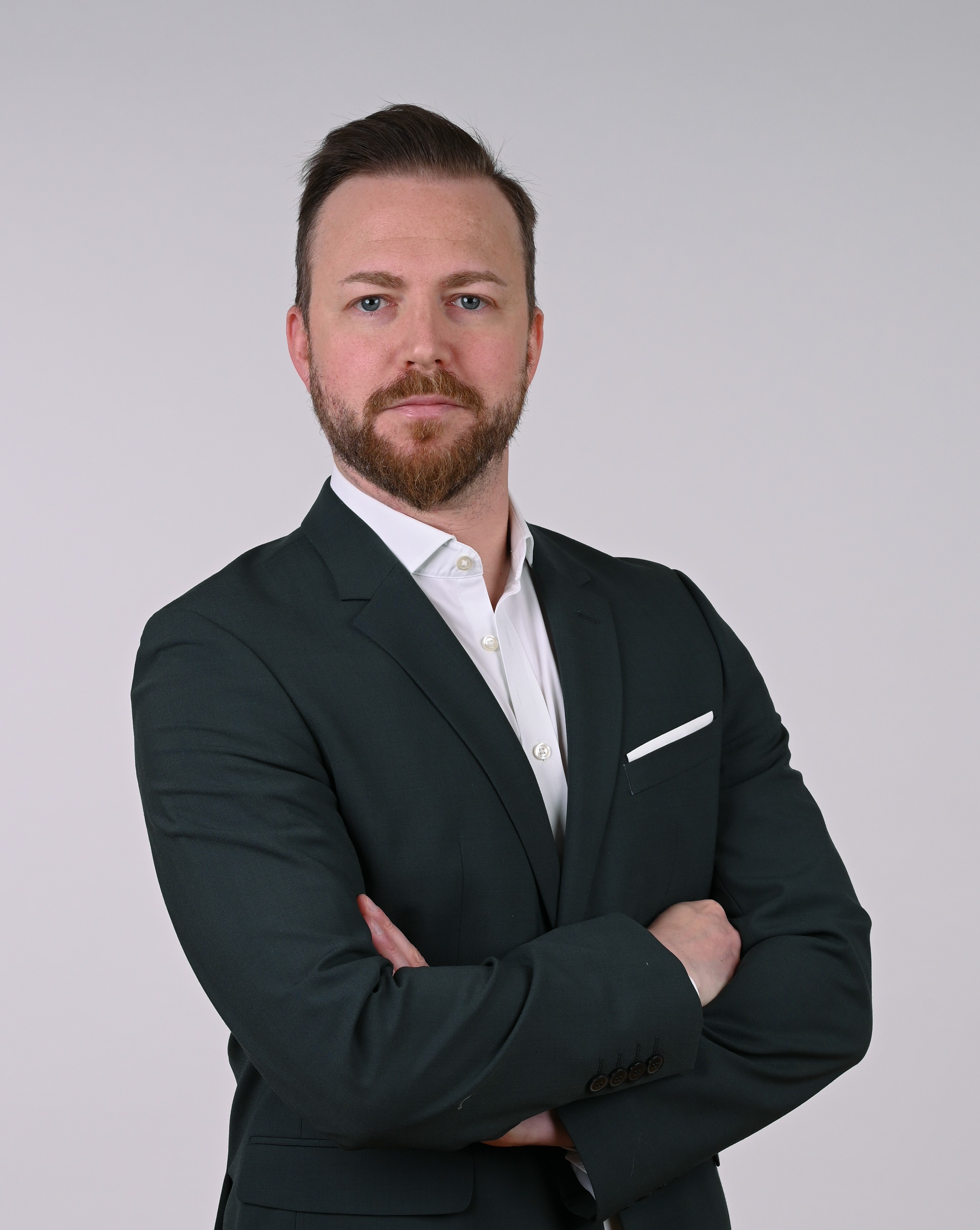
I'm Marco Pigozzi. VP Sales & Marketing based in Zurich, with a career built entirely around one specific problem: selling technically complex products into OEM markets where the buyer takes years to decide, involves eight people in the process, and treats vendor selection as a long-term risk management exercise.

My work has been in photonics and optical systems — a sector where the products are extraordinary but the commercial challenges are brutal. Multi-level decisions involving R&D, procurement, quality, and C-suite. Pilots that run for 12 months and die in legal. Champions who leave mid-cycle. Competitors who underprice to win the platform and regret it later.

MP Tech Business is how I make that experience available to the sales directors, business developers, and founders who are fighting the same battles — without having to lose the same deals I lost to figure it out.

Explore the Course Get in Touch
Marco Pigozzi
VP Sales & Marketing · ZurichPhotonics · Optical Systems · Semiconductor15+ years closing complex OEM dealsMachine Vision · Microscopy · Laser ProcessingOphthalmology · Industrial AutomationDeep-Tech B2B SpecialistVP Sales & Marketing · ZurichPhotonics · Optical Systems · Semiconductor15+ years closing complex OEM dealsMachine Vision · Microscopy · Laser ProcessingOphthalmology · Industrial AutomationDeep-Tech B2B Specialist
The person behind the framework

How I got here — and why it matters

01

I didn't plan to end up in OEM sales

My career started in headhunting. Cold calling. Handling rejection before 9am. Learning to listen for what people weren't saying. At the time I didn't think of it as sales training — I thought of it as a temporary detour before I got back to something more technical.

That detour turned out to be the most commercially useful thing I ever did. It gave me a discipline for building relationships, structuring conversations, and navigating objections that I have never found in any sales methodology book.

When I moved into selling technical equipment — first at Olympus, then into OEM systems and subsystems for microscopy, eventually into photonics — I brought that discipline with me. It sat awkwardly alongside the engineering-first culture I found in most of these companies. But it worked.

02

The pattern I kept seeing

Everywhere I went, the commercial approach was the same: wait for the customer to come to us, respond quickly with technical depth, demonstrate competence, and hope they buy. It worked — until it didn't.

The problem is not that this approach fails. It is that it does not scale. It is entirely passive. It limits pipeline to whoever happens to reach out. It misses opportunities inside existing accounts because everyone is focused on the active project, not the next one. And without a structured way to handle objections, growth becomes a function of luck rather than process.

I became obsessed with this gap — between the technical excellence of photonics companies and their commercial underdevelopment. Not because it bothered me intellectually, but because I watched it cost real companies real opportunities, repeatedly.

03

What actually drives me

Work has been how I have seen the world. Italy, the UK, Germany, China, Taiwan, Japan, the United States — I have built commercial relationships across cultures that think about trust, time, and decisions in fundamentally different ways. That has shaped how I approach every negotiation and every account.

MP Tech Business exists because I believe the gap between technical excellence and commercial effectiveness in photonics is closable. Not by turning engineers into salespeople, but by giving both sides a shared commercial language and a framework that respects the complexity of what they are actually doing.

04

On speaking the right language

The most common commercial failure I observe in photonics is not a lack of effort — it is a language gap. Sales professionals who cannot engage credibly with PhD optical engineers. Engineers who know everything about the product and nothing about how the buyer makes decisions internally.

The best commercial conversations I have had in this industry were not about closing. They were about understanding the buyer's system well enough to speak their language — and then connecting it to a commercial reality they had not yet seen. That translation is the skill that is almost never formally taught. It is what the course, the articles, and the advisory work are all built around.

In brief

Italian by origin. Global by practice.

LondonParisMunichFrankfurtAmsterdamMilanViennaStockholmBarcelonaWarsawZürich
🌍

Multicultural by profession

Born and educated in Italy. Built my commercial career in Italy, UK, Germany and now based in Switzerland with worldwide exposure, leading sales organizations in 4 continents — managing global operations across the geographies where deep-tech OEM buyers operate.

📈

Documented revenue growth

A consistent track record of double-digit revenue growth across three deep-tech OEM companies in different markets and geographies. The methodology behind the course produced these results.

🎓

5 credentials, built in parallel

Every qualification was completed while running a full commercial career across multiple countries — from aerospace engineering to executive MBA to Wharton analytics to Kellogg marketing strategy.

Politecnico di Milano Kingston EMBA CMI Level 7 Wharton Analytics Kellogg B2B Marketing

Why I built this

Sales training in the B2B technical space is dominated by frameworks built for shorter cycles and simpler buyer dynamics. SPIN Selling, Challenger, Miller Heiman — all useful foundations. None of them address what actually happens when your deal spans three fiscal years and six people whose interests don't fully align.

I built the OEM Sales Mastery course because I couldn't find what I would have wanted 15 years ago: something specific, honest, and built from real OEM experience rather than adapted from generic B2B methodology.

OEM sales strategy

How I work

I work with a small number of companies and individuals at a time. Not because I'm trying to signal exclusivity — because the engagement is only useful if it's substantial. I'm not interested in a nominal arrangement where I review slides once a month.

On the training side, the course is self-paced but the frameworks are built for active deals. The most useful thing you can do is apply each module to something in your pipeline while you're going through it.

Get in touch